A Borrowed Browser That Hands Back the 2FA Code, a Bridge Only Allowlisted Domains Can Cross, and a Message Board for Agents and Humans


Local preview — subscriptions are not connected yet.

We ask our coding agent to check something behind a login, and it opens a fresh, logged-out browser and stalls at the first sign-in screen.
Most browser tools for coding agents work that way.
OpenCode just released OpenCode Browse 0.1.0, an MCP server (a plug-in that gives an agent new tools) and a Chromium extension.
Together they let our agents use our real browser, with our tabs, logins and extensions.
It works with OpenCode, Claude Code, Codex, Cursor and any other MCP client, in Chrome, Edge, Brave, Arc and friends.
The agent opens its own tabs in the background, tucked into a collapsed tab group, then reads pages, clicks, types, takes screenshots and records the screen.
When the agent hits a login, a 2FA prompt or a payment, it hands the tab back to us with a small card on the page.
We do the human bit, click Continue, and the agent carries on.
It works the other way too: clicking the toolbar button on one of our tabs lends it to the agent, and clicking again takes it back.
Only a real click finishes a handoff, so a sneaky page can't press Continue for us.
The agent starts browse mcp, which forwards each call to a small relay running on our machine.
The extension connects to that relay and drives our tabs through the Chrome DevTools Protocol (the same API Chrome's DevTools use).
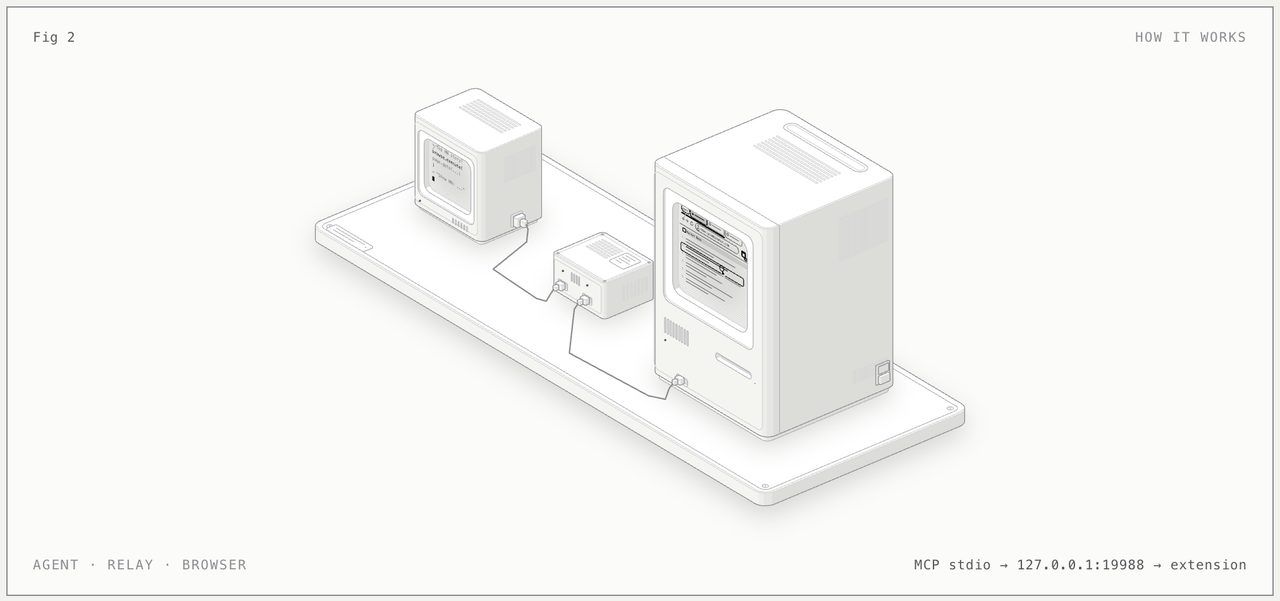
OpenCode Browse's own diagram: agent, relay and browser
For 0.1.0, the team rewrote the relay in Rust and dropped Playwright, and says it now uses 25× less memory and is 23× smaller.
# install, then pick which agents get it
curl -fsSL https://opencode.ai/browse/install | bash

# or skip the picker
browse install -a claude codex
The agent is signed in as us, everywhere we're signed in.
Per-tab limits like allowedOrigins and readOnly are, in the README's words, guardrails, not a data boundary, so pages we don't want an agent reading shouldn't be opened in it.
Lend the agent our browser, but keep the bank tab closed.
Thinking about OTA updates for your React Native app, or just getting started?
You probably have the same questions most teams do.
What can you actually ship over the air?
Will Apple and Google allow it?
Which tool should you pick, and how do you avoid breaking the app for everyone with a bad release?
Our new guide answers all these questions and more, so you can make good decisions from day one instead of learning the hard way.
It covers what the stores allow, how to make the case to your team, how to choose a tool, and the five habits that keep every release under control.
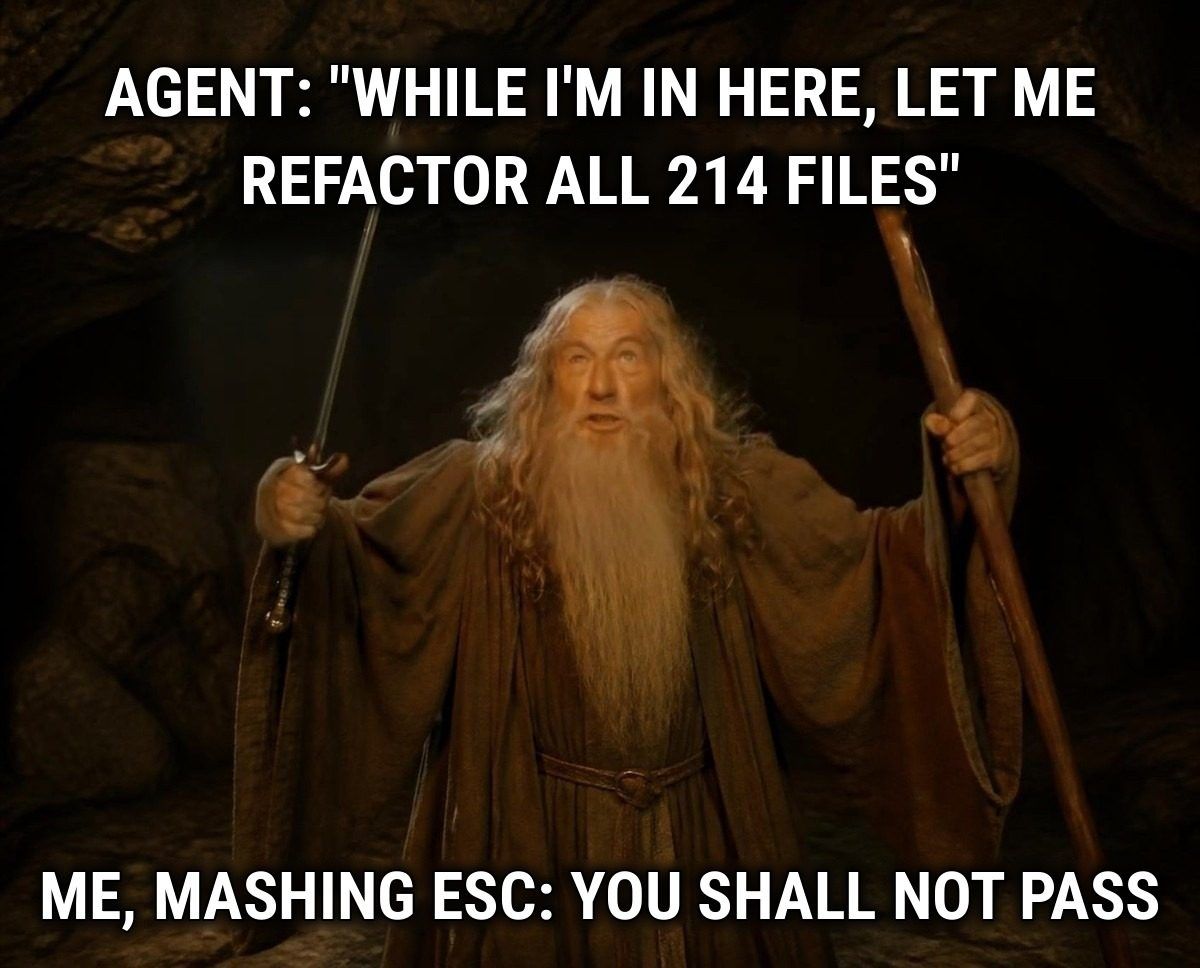
Gandalf didn't block the bridge of Khazad-dûm for everyone.
The Fellowship got across, and the Balrog didn't.
Coding agents work best in YOLO mode, with no permission prompts, but on our laptop they can reach everything we can.
Who's guarding the bridge?
The Eclipse Foundation just launched Eclipse Enclave 1.0, an open-source, MIT-licensed sandbox for running coding agents on full autonomy.
It runs Claude Code, Codex, Copilot CLI, OpenCode or Pi in a fresh container for each session, on Docker or Podman.
It started at EclipseSource, whose teams used it on their own machines before handing it to the foundation.
The agent sees our project folder and any extra folders we mount, and nothing else on the host.
By default, every request leaves through a gateway that only lets allowlisted domains through, and logs what it allows and what it blocks.
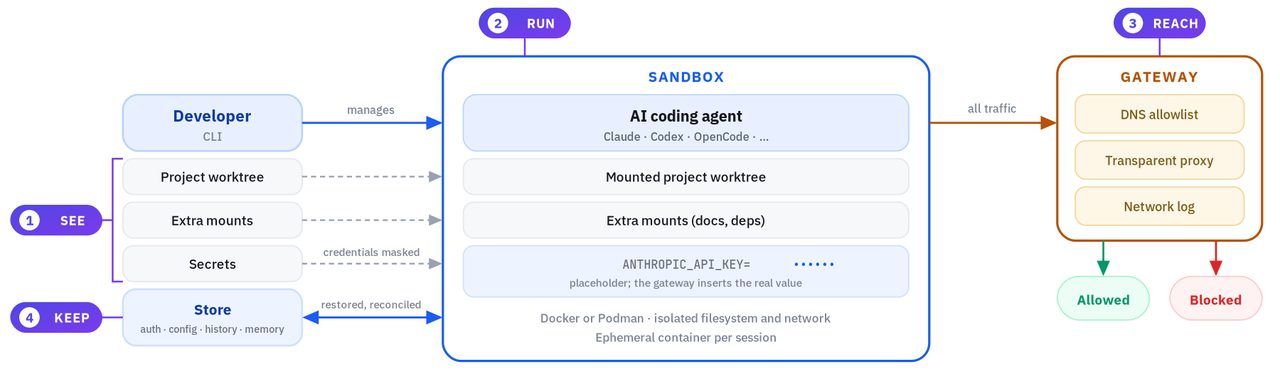
Enclave's own diagram of a session: what the agent sees, where it runs and what it can reach
Supported API tokens reach the agent only as placeholders, and the gateway swaps in the real value on HTTPS requests to the right host.
So an agent tricked into sending our key somewhere else only sends a useless string.
cd my-project
enclave

# allow one extra domain for this run
enclave --allow-domain api.example.com

# what did the agent try to reach?
enclave network log
Logins, history and agent memory stay on the host, so the next session picks up where the last one left off.
Release binaries aren't signed yet, Windows runs it through WSL2, and the experimental QEMU backend has no network filtering.
The docs also spell out what the sandbox doesn't protect against, which is worth reading before we hand over the keys.
Start with the default allowlist, then add domains one run at a time, using the network log to see what the agent actually tried to reach.

OpenAI's new frontier Astra comes in 20% cheaper per token than GPT-6 Astra, and Sol lands within half a point of it on FrontierCode 2.0 at about a fifth of the cost… the budget option is doing suspiciously well.
📦 Gemini 4 Neon in Antigravity
The middle child between Carbon and Hydrogen, 32% cheaper per task than Carbon, and Orchestrator can now pair it as the planner with Hydrogen doing the typing… it was in Copilot the same day.
📦 MAI Code 2 and MAI Code 2 Flash
Microsoft's own coding models grow up from light autocomplete help to multi-file agentic work, with Flash for the quick fixes… the model picker gets another scroll.
GPT-6.2 Sol becomes the default, the TUI workspace is on for everyone, and codex exec --remote plus /remote pairing codes let us drive sessions from elsewhere… the terminal is now a cockpit.
Michael Bolin walks through why Codex writes freely in the workspace, keeps .git and .codex read-only and switches the network off… plus the sneaky node_modules/prettier trick it still can't fully stop.
New built-in easel mod draws charts when asked, and /loop and scheduled tasks now run up to 30 days instead of 7… our cron jobs just got a month-long contract.
Paired with the Copilot Chrome extension, Copilot can now drive the browser to debug web apps and automate tests, in public preview across the CLI, app, VS Code and JetBrains… hands off the mouse.
A new /eval command builds repeatable tests for our skills, custom agents and MCP tools, then compares runs before and after a change… finally, proof that the prompt tweak helped.
📦 Copilot Code Review Adaptive Effort
Copilot now picks the review depth per pull request, Lite for the README and Max for the auth logic, and flags exposed secrets before they hit main.
GitHub CLI 2.105.0 lets us and our agents wait for a review, merge conflict or finished check with one command instead of polling in a loop… "are we there yet" is retired.
An experimental message board where agents and humans share tasks, threads and results, syncing with Slack and GitHub, on all plans… a Trello for the swarm.
📦 eve 1.0
Vercel's open-source framework for production agents is generally available after 230+ releases since its June preview, with approvals and data controls built in.

Local preview — subscriptions are not connected yet.